Jacquard Looms Overview: Insights, Details, Resources, and Discoveries for Modern Textiles
Jacquard looms are specialized weaving machines designed to create intricate patterns through independent control of warp threads. The concept originated in the early 1800s when Joseph-Marie Jacquard introduced a punched-card system that revolutionized textile production. This invention allowed complex motifs, decorative fabrics, and highly detailed patterns to be produced with greater accuracy.
Modern Jacquard looms evolved from mechanical punched-card mechanisms to electronically controlled systems capable of managing thousands of warp ends. These improvements exist because textile manufacturers needed a way to weave patterns that traditional looms could not achieve with efficiency or detail. Today, Jacquard looms enable the creation of brocade, damask, tapestry, upholstery fabrics, and a wide range of decorative materials used globally.Their existence is deeply connected to the need for artistic expression in textiles, industrial efficiency, and digital patterning, making them one of the most influential technologies in weaving history.
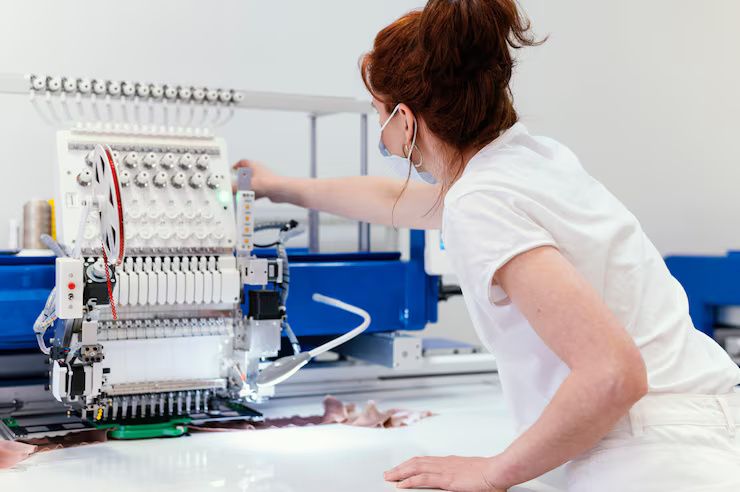
Importance – Why Jacquard Looms Matter Today
Jacquard looms play a significant role in the textile sector because they support advanced design capabilities that cannot be easily replicated by standard weaving systems. They matter today due to:
-
Precision in pattern creation
-
Capability to handle intricate motifs
-
Digital integration for fast pattern changes
-
Compatibility with fashion, home textiles, and technical applications
These looms impact designers, textile engineers, researchers, and manufacturers. Designers depend on Jacquard systems to translate digital illustrations into structured woven patterns. Students and educators use them to study textile architecture and weave structures. Industrial units rely on them to produce high-value fabrics that support global markets.
One major problem they solve is the challenge of producing detailed and repeatable designs without manual intervention. Digital Jacquard heads simplify programming and reduce the mechanical complexity associated with traditional card-based systems. This capability leads to improved accuracy, stable production, and flexible pattern adjustments.
As the world trends toward personalization and decorative fabric applications, the importance of Jacquard looms continues to grow
Recent Updates – Trends and Developments (2023–2025)
Recent years have seen notable progress in Jacquard loom technology:
2023
-
Major manufacturers introduced compact Jacquard modules with lower vibration and improved warp control.
-
Software updates enhanced pattern simulation accuracy before weaving.
2024
-
Digital Jacquard heads with higher hook capacity became more widely adopted.
-
AI-supported patterning tools emerged, allowing faster conversion of artwork into woven files.
-
Increased alignment with Industry 4.0 standards, including remote diagnostics.
2024–2025
-
Smart sensors for tension balancing improved fabric uniformity.
-
Developments in electronic dobby–Jacquard hybrid systems enabled multi-layer fabrics.
-
Sustainable weaving initiatives encouraged better energy distribution in the lifting mechanism.
These updates reflect a shift towards intelligent weaving environments. The integration of predictive maintenance and pattern automation reduces downtime. Enhanced hook density supports a broader range of designs, while digital interfaces shorten the time needed for pattern correction.
Modern Jacquard looms also emphasize sustainability, with optimized lifting cycles and reduced electrical consumption. This aligns with global efforts to make textile manufacturing cleaner and more efficient.
Laws or Policies – Regulatory Influence on Jacquard Looms
Jacquard looms fall under broader textile machinery regulations, which vary by region but generally include:
Industrial safety and equipment standards
Governments mandate protective guarding, emergency controls, and electrical compliance for textile machinery. These rules ensure safe operation and reduce accident risks.
Energy efficiency policies
Many countries encourage upgrading to energy-efficient machinery. Jacquard looms with optimized motors and smart controllers often align with these requirements.
Digital compliance and cyber-security protocols
With Jacquard systems increasingly connected to networks, data protection and controlled access policies influence their usage. Facilities must manage pattern files and machine settings securely.
Environmental guidelines
Some regions focus on noise reduction and responsible electrical usage. Regulations may also address waste management related to sampling or testing.
Technology-modernization programs
Governments sometimes support modernization of textile clusters. Though indirect, these programs encourage the adoption of advanced Jacquard technology.
While no direct laws govern Jacquard looms exclusively, these regulations impact their installation, operation, and maintenance across textile facilities.
Tools and Resources – Helpful Platforms and Knowledge Sources
A variety of tools support the operation and understanding of Jacquard looms:
-
Weave design software for pattern creation, structure simulation, and mapping
-
Pattern conversion tools that translate artwork into technical Jacquard files
-
Warp tension calculators used to estimate suitable tension settings
-
Digital textile engineering apps offering yarn data, weave structures, and troubleshooting
-
Production monitoring dashboards that track hook performance, loom cycles, and pattern repeat consistency
-
Maintenance-planning templates for scheduling inspections of hooks, springs, lifters, and electronic modules
-
Online textile knowledge libraries that provide detailed explanations, research papers, and case studies
These tools help students learn more effectively, assist engineers in setup optimization, and guide technicians in maintaining reliable operation.
FAQs
1. What is the main purpose of a Jacquard loom?
Its purpose is to independently lift warp threads to create complex woven patterns that cannot be achieved with simpler weaving mechanisms.
2. What types of fabrics are commonly made on Jacquard looms?
Brocade, damask, upholstery textiles, jacquard sarees, fashion fabrics, mattress textiles, terry towels, and decorative materials.
3. How does a digital Jacquard loom differ from the traditional punched-card system?
Digital systems use electronic hooks and computer-controlled patterning, while traditional systems rely on physical cards. Digital Jacquard looms enable faster pattern changes and improved precision.
4. What determines the complexity of a Jacquard design?
The number of hooks, warp density, yarn type, and digital mapping determine how detailed a pattern can be.
5. Is a Jacquard loom suitable for technical textiles?
Yes, especially for multilayer structures, filtration fabrics, and engineered materials requiring precise warp control.
Conclusion
Jacquard looms represent a major advancement in weaving technology, merging artistic creativity with engineering precision. Their evolution from mechanical cards to electronic systems demonstrates the industry’s commitment to innovation. Today, they enable detailed pattern production, support digital integration, and contribute to advanced fabric development across fashion, interiors, and technical sectors.
With ongoing updates involving automation, AI-supported pattern tools, and sustainability improvements, Jacquard looms remain central to modern textile evolution. Understanding their structure, importance, regulatory environment, and available tools helps professionals and students navigate the complex world of patterned fabric manufacturing. Their continued development signals a future where woven design becomes more flexible, efficient, and technologically advanced.