Lathe Machines Overview: Key Parts, Working Principles, and Industrial Applications Explained
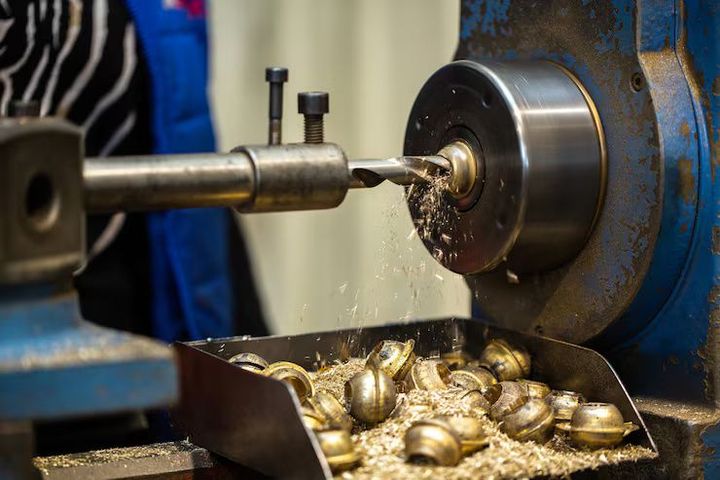
A lathe machine is a fundamental machine tool used in manufacturing and mechanical workshops to shape materials such as metals, wood, and plastics. It works by rotating the workpiece along a fixed axis while a cutting tool removes material to form cylindrical or symmetrical shapes. The concept of lathe machines dates back to ancient civilizations, but their modern industrial form emerged during the Industrial Revolution, especially when more precise metalworking began to be required.
The primary principle is rotation. When the workpiece turns and the cutting tool remains steady or moves along controlled paths, materials can be shaped accurately. This made lathe machines an essential foundation for producing machine parts, tools, hardware components, vehicle shafts, aerospace components, and numerous everyday engineered items.
Lathe machines exist in different types, including manual lathes and Computer Numerical Control (CNC) lathes. Manual lathes rely on operator skill, while CNC lathes use programmed automation for consistent precision. This shift has enabled higher-quality production with fewer errors and greater repeatability in modern manufacturing.

Why Lathe Machines Matter Today
Lathe machines continue to be important because many industries require accurate and repeatable component manufacturing. Components with precise dimensions are critical in sectors such as:
-
Automotive
-
Aerospace
-
Industrial machinery
-
Medical equipment
-
Furniture and woodcraft
-
Energy and renewable system components
The ability to shape hard and durable materials makes lathe machines central to precision machining, metal fabrication, and industrial automation workflows.
They help solve several real-world needs:
-
Maintaining uniform standards in production
-
Reducing manual variability in component shapes
-
Supporting custom and mass manufacturing consistency
-
Enabling repair, rework, and prototyping in maintenance workshops
In today’s manufacturing environment, reliability and accuracy are essential. Lathe machines contribute to improved component quality and better performance of final products.
Key Parts of a Lathe Machine
| Part Name | Purpose | Notes |
|---|---|---|
| Bed | Base supporting the entire machine | Provides alignment and rigidity |
| Headstock | Houses the spindle which rotates the workpiece | May contain gears or variable motor drive |
| Tailstock | Supports the other end of long workpieces | Can hold tools like drills |
| Carriage | Moves the cutting tool along the bed | Guides precise tool movement |
| Tool Post | Holds the cutting tool | Can be adjusted for tool angle and height |
| Lead Screw / Feed Rod | Enables automatic longitudinal feed | Used especially for thread cutting |
| Chuck | Holds the workpiece firmly | Different chuck types suit different shapes |
Understanding these parts helps operators maintain control over how material is cut and shaped.
Working Principles of Lathe Machines
The working principle is based on controlled material removal. The steps generally include:
-
The workpiece is mounted on the chuck or between the center points.
-
The spindle rotates the workpiece at selected speeds.
-
The cutting tool is positioned using the carriage and tool post.
-
Material is removed through controlled feed movement, shaping the workpiece.
Common operations performed:
-
Turning (reducing diameter)
-
Facing (making the end surface flat)
-
Threading (forming screw threads)
-
Drilling and boring (creating holes)
-
Knurling (creating textured grip patterns)
In automated CNC lathes, the tool movement is programmed, enabling high repeatability and reduced operator input.
Recent Updates and Industry Trends
The machining industry has seen significant technical development in recent years, with a focus on automation and efficiency.
Key trends (2023–2025):
-
CNC and Smart Manufacturing Integration (2024): Many industries now integrate CNC lathes with IoT and digital monitoring for predictive maintenance and efficiency optimization.
-
Material Advancements (2023–2025): Growth in usage of advanced alloys and composites requires more durable cutting tools and stable machine configurations.
-
Safety and Ergonomics Improvements (2024): Modern lathes now include enhanced guards, noise control, and operator-friendly controls.
-
Energy-Saving Motor Technologies (2023 onward): Machines are increasingly using energy-efficient variable-speed spindle drives.
These trends support increased productivity, reduced downtime, and better process monitoring in industrial environments.
Regulations and Standards
Lathe machine usage is typically governed by national and industrial safety and manufacturing standards.
Examples of regulatory considerations:
-
Workplace Safety Regulations: Many countries require safety shields, emergency stop mechanisms, and operator training.
-
Machine Tool Accuracy Standards: Standards such as ISO 1708 define dimensional tolerance expectations for machine performance.
-
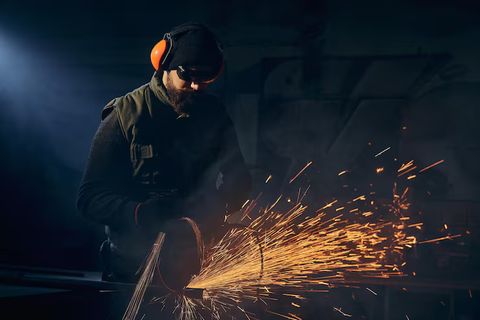
Industrial Safety Guidelines: Organizations emphasize protective masks, eye shields, gloves, and hazard awareness to reduce workplace accidents.
The regulations aim to create safer environments while ensuring machinery produces accurate and uniform output consistently.
Helpful Tools and Resources
The following tools and references can assist with working, monitoring, and learning about lathe operations:
-
Mach3 & LinuxCNC – Controllers for CNC machine programming and control.
-
Online Machining Tolerance Calculators – Helps determine suitable dimensions and allowances.
-
Tool Geometry Charts – Guides for selecting correct cutting angles for different materials.
-
Engineering Drawing Resources (e.g., CAD libraries) – Useful for preparing part models before machining.
-
Material Hardness Reference Tables – Helps select appropriate speeds and feed rates.
These resources support both beginners and experienced users aiming to refine machining skills and accuracy.
Frequently Asked Questions
What types of materials can be machined on a lathe?
Metals like steel, aluminum, brass, and copper are commonly machined, along with wood and industrial plastics, depending on the cutting tools used.
How is a CNC lathe different from a manual lathe?
A CNC lathe uses computer programming to control cutting motion, enabling consistent accuracy and high-volume production. Manual lathes require operator input and control.
Why is spindle speed important in lathe operations?
Spindle speed affects cutting efficiency, tool life, and surface finish. Different materials require different speeds for optimal results.
What safety practices should be followed?
Keep hands clear of moving parts, secure loose clothing, use protective eyewear, and ensure the workpiece is properly clamped before starting.
What are the most common lathe operations?
Turning, facing, drilling, boring, knurling, taper cutting, and threading are widely used operations across industrial machining workflows.
Conclusion
Lathe machines remain a core part of modern machining due to their ability to produce precise, reliable, and standardized components across various industries. Their evolution from manual to CNC automation reflects broader trends in precision manufacturing and industrial automation. Understanding their parts, working principles, applications, and safety practices ensures efficient and safe operation. As manufacturing technologies continue to advance, lathe machines are expected to remain central tools supporting engineering, production, and innovation.