Understanding Homogenizer Machines: A Clear Guide with Facts, Details, and Tips
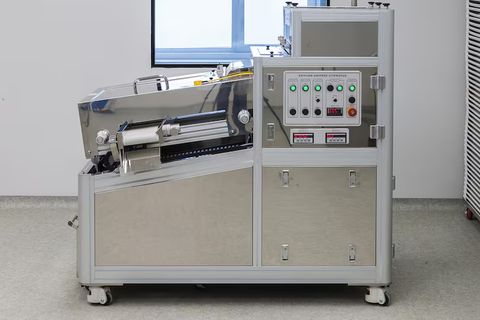
Homogenizer machines are mechanical devices designed to create uniform mixtures by breaking particles, droplets, or cells into smaller and evenly distributed sizes. These machines exist because many industries—such as food processing, pharmaceuticals, biotechnology, and cosmetics—require smooth, stable, and consistent products. Homogenization enhances texture, quality, and reliability.
The concept of homogenization emerged in the early 20th century with dairy processing, where uniform milk fat distribution was essential. Over time, the technology expanded into advanced applications such as nano-emulsions, cell disruption, laboratory testing, and material research. Today, homogenizers are available in laboratory-scale and industrial configurations, depending on the required pressure, viscosity, and material characteristics.
Importance
Homogenizer machines matter because consistency is critical in modern manufacturing. These machines affect professionals in sectors such as food science, pharmaceutical formulation, biotechnology research, chemical engineering, cosmetics, and nutritional product development. By reducing particle size and increasing stability, homogenizers improve product texture, shelf life, and quality control.
Homogenization solves several common challenges:
-
Uneven mixtures and phase separation
-
Poor solubility of active ingredients
-
Difficulty achieving micro- and nano-sized particles
-
Instability in emulsions and suspensions
-
Inefficient cell lysis in biotechnology applications
Because industries demand high-quality outputs with predictable performance, homogenizer machines have become essential tools for precision and reliability.
Recent Updates
In 2024–2025, several trends have influenced the field of homogenization technology:
-
Growth of nano-emulsion demand (2024): Industries such as pharmaceuticals and skincare increased adoption of nano-formulations, requiring more advanced high-pressure homogenizers.
-
Energy-efficient models released (2024–2025): Manufacturers introduced designs that reduce energy consumption while maintaining high pressure for sustainability initiatives.
-
Automation integration (2025): Automated monitoring systems and digital interfaces became more common, allowing real-time pressure control and predictive maintenance.
-
Higher standards for food processing (January 2025): Updated global guidelines encouraged better particle-size uniformity and hygiene standards in dairy and beverage processing.
-
Increased investment in biotechnology equipment (2024–2025): Research labs and pharmaceutical developers focused on controlled cell disruption and reproducibility, boosting demand for precision homogenizers.
These updates reflect how technology continues to evolve to meet regulatory, sustainability, and performance expectations.
Laws or Policies
Regulations affecting homogenizer machines vary by country but generally involve:
India
-
FSSAI processing regulations: Require safe and hygienic processing of dairy, beverages, and food products where homogenizers are used.
-
GMP guidelines for pharma: Homogenization processes must meet Good Manufacturing Practice requirements for purity, consistency, and contamination control.
-
Environmental rules (2024 updates): Energy-efficient machinery is encouraged under industrial pollution and waste-management guidelines.
International Influences
-
ISO standards: Many machines follow ISO guidelines for pressure safety, manufacturing quality, and testing reliability.
-
Pharmaceutical quality standards: Homogenization steps must meet global benchmarks such as WHO GMP and ICH guidelines.
-
Food safety frameworks: HACCP and Codex Alimentarius mention homogenization as a control step for certain product categories.
These policies ensure safety, uniformity, and regulatory compliance across industries using homogenizer technology.
Tools and Resources
Professionals working with homogenizer machines often use tools and resources such as:
-
Particle size analyzers for verifying uniformity
-
Viscosity testing tools for determining flow behavior before and after homogenization
-
Pressure-monitoring digital dashboards integrated into certain machines
-
Emulsion stability calculators used during formulation research
-
Lab protocols and templates for documenting homogenization steps
-
Maintenance checklists for pressure valves, seals, and pistons
-
Online educational resources for homogenization theory and particle reduction principles
These resources help create a controlled, repeatable, and efficient homogenization process.
Comparison Table: Types of Homogenizer Machines
| Type of Homogenizer | Typical Use | Particle Size Range | Pressure Level |
|---|---|---|---|
| High-Pressure Homogenizer | Pharma, biotech, food | Micro to nano | 100–1500 bar |
| Ultrasonic Homogenizer | Cell disruption, lab research | Nano | Depends on amplitude |
| Rotor-Stator Homogenizer | Liquid mixing, emulsions | Micro | Low to medium |
| Inline Homogenizer | Continuous processing | Micro | Medium |
| Lab-Scale Homogenizer | R&D experiments | Micro to nano | Variable |
Graph: Particle Size Before and After Homogenization
(Described for accessibility)
A simple line graph would show particle size decreasing significantly after multiple homogenization passes, demonstrating improved uniformity and stability.
FAQs
1. What is the main purpose of a homogenizer machine?
A homogenizer machine reduces particle size and creates uniform mixtures, improving stability, texture, and quality in products such as dairy, medicines, emulsions, and cosmetic formulations.
2. Which industries commonly use homogenizers?
They are widely used in the food industry, pharmaceuticals, biotechnology laboratories, chemical processing, nutrition products, and cosmetic manufacturing.
3. What is high-pressure homogenization?
It is a process where fluids are forced through a small orifice at extremely high pressure, breaking particles into micro or nano sizes for enhanced uniformity.
4. What factors affect homogenization efficiency?
Pressure level, temperature, product viscosity, number of passes, and machine configuration all influence results.
5. Are homogenizer machines used for cell disruption?
Yes. In biotechnology and microbiology, they efficiently break cell walls to release intracellular contents for research or production.
Conclusion
Homogenizer machines play a critical role in modern manufacturing by enhancing uniformity, stability, and quality across various products. Their relevance has grown with advancements in nano-emulsions, biotechnology, automated control systems, and updated regulatory standards. By understanding the principles, updates, policies, and practical tools associated with homogenization, industries can achieve more consistent and reliable outcomes. As technology evolves, homogenizers will continue contributing to improvements in research, formulation, and product development across multiple fields.