Antibody Production in the Immune System: An Overview
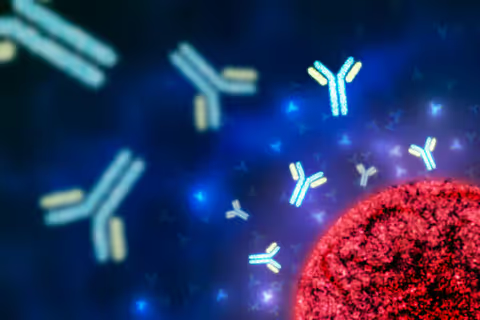
Antibody production is a fundamental biological process that helps the human body identify and respond to harmful substances such as viruses, bacteria, and toxins. Antibodies are specialized proteins created by immune cells to recognize specific foreign molecules, known as antigens. This process exists to support survival by allowing the body to detect threats and respond in a targeted and efficient way.
The immune system is broadly divided into innate and adaptive components. Antibody production belongs to the adaptive immune response, which develops specific recognition over time. When the body encounters an unfamiliar antigen, certain white blood cells—called B lymphocytes—are activated. These cells undergo changes that enable them to produce antibodies designed to bind precisely to that antigen.
Once formed, antibodies circulate in the blood and lymphatic system. Their main role is to attach to antigens, marking them for removal or neutralizing their harmful effects. This targeted response allows the immune system to act accurately without damaging healthy tissues, which is essential for maintaining internal balance.
Importance: Why Antibody Production Matters Today
Antibody production plays a major role in modern health and biomedical research. It affects people of all ages and is especially relevant in understanding immunity, disease prevention, and long-term health protection.
Key reasons this process matters include:
-
Supporting immune memory after infections
-
Contributing to vaccine research and development
-
Helping scientists understand immune-related disorders
-
Enabling progress in biotechnology and immunology research
In public health, antibody production explains why some infections result in long-lasting immunity while others do not. It also helps researchers evaluate immune responses across populations. For individuals with weakened immune systems, understanding antibody behavior is essential for managing susceptibility to infections.
From a scientific perspective, antibodies are also used as analytical tools in laboratories. They assist in disease detection, biological research, and diagnostic testing, making them central to both healthcare and life sciences.
Recent Updates: Trends and Developments in the Past Year
Over the past year, antibody research has continued to evolve, particularly in the context of immune response monitoring and vaccine science.
2025 updates include:
-
Ongoing studies into long-term antibody persistence following viral exposure
-
Expanded use of antibody profiling in population-level immunity research
-
Advances in monoclonal antibody engineering for laboratory and clinical studies
-
Improved analytical methods for measuring antibody diversity and strength
In mid-2025, global health organizations reported updated findings on how antibody responses vary by age and immune condition. Research published in early 2026 also highlighted improvements in high-throughput antibody analysis, allowing scientists to study immune responses more precisely and efficiently.
These developments reflect a broader trend toward data-driven immunology, where antibody behavior is analyzed at scale to inform public health strategies and scientific understanding.
Laws or Policies: Regulatory and Government Influence
Antibody-related research and applications are influenced by scientific regulations and public health policies. Governments and international organizations establish guidelines to ensure ethical research practices, data accuracy, and public safety.
In many countries, antibody studies are guided by health research frameworks supported by organizations such as the World Health Organization and the Centers for Disease Control and Prevention. These bodies issue recommendations on immune monitoring, laboratory standards, and data reporting.
Regulatory authorities such as the Food and Drug Administration oversee the approval and evaluation of antibody-based diagnostic and research tools. Policies often focus on laboratory quality, clinical data transparency, and ethical handling of biological samples.
Public funding programs also influence antibody research by prioritizing studies related to infectious diseases, immune disorders, and preventive health initiatives.
Tools and Resources: Helpful References and Platforms
Several tools and resources support learning and research related to antibody production. These are commonly used in academic, clinical, and educational settings.
Commonly used resources include:
-
Immunology textbooks and digital reference libraries
-
Public health databases tracking immune response trends
-
Laboratory platforms for antibody measurement and analysis
-
Educational portals offering immunology fundamentals
Examples of useful tools:
| Resource Type | Purpose | Typical Users |
|---|---|---|
| Antibody databases | Track known antibody structures | Researchers |
| Immune response calculators | Analyze antibody levels | Laboratories |
| Educational websites | Explain immune mechanisms | Students |
| Scientific journals | Share peer-reviewed findings | Academics |
These resources help ensure accurate understanding and consistent methodology across studies.
FAQs: Common Questions About Antibody Production
How are antibodies produced in the body?
Antibodies are produced by B cells after they recognize a specific antigen. Activated B cells transform into plasma cells, which release antibodies into circulation.
Do antibodies remain in the body permanently?
Some antibodies decline over time, while others persist for years. The duration depends on the antigen and the strength of the immune response.
What is immune memory?
Immune memory refers to the ability of the immune system to respond more quickly to a previously encountered antigen through memory B cells.
Are all antibodies the same?
No. Antibodies differ in structure and function. Common types include IgG, IgA, IgM, IgE, and IgD, each serving a specific role.
How is antibody production measured?
Laboratories measure antibodies using blood-based assays that quantify concentration and binding strength.
Conclusion: A Foundational Process in Immunology
Antibody production is a cornerstone of the adaptive immune system. It enables precise recognition of harmful agents and supports long-term immune protection. From everyday infections to advanced biomedical research, antibodies influence how the body responds to its environment.
Recent scientific progress continues to refine how antibodies are studied and understood, while regulatory frameworks help ensure responsible research practices. With ongoing advances in immunology and biotechnology research, antibody production remains a critical area of study for understanding health, disease, and immunity at both individual and population levels.
Disclaimer: The information provided in this article is for informational purposes only. We do not make any claims or guarantees regarding the accuracy, reliability, or completeness of the information presented. The content is not intended as professional advice and should not be relied upon as such. Readers are encouraged to conduct their own research and consult with appropriate professionals before making any decisions based on the information provided in this article.